Houston, We Have a Purer O2 Supply: The Interstellar Case for Pressurized Pampering
Alright, space cadets and terrestrial tinfoil hat connoisseurs, gather 'round. We've been dutifully strapping our bravest (and occasionally, most expendable) into glorified tin cans and yeeting them towards the void for decades now. We've conquered low Earth orbit, bounced on the Moon, and are currently eyeing Mars like it owes us rent money. But have we truly optimized our astronauts for the rigors of the cosmos? I submit: we have not. We've been missing the most glaringly obvious, scientifically delicious solution: Hyperbaric Oxygen Therapy (HBOT) for every man, woman, and sentient blob heading beyond the Karman line.
Now, before you scoff and accuse me of huffing leftover rocket propellant, let's break down the "science" – or at least, the science as it could be if we just squinted a bit harder and had a bigger R&D budget funded by artisanal kombucha sales.
The Problem: Space is Actively Trying to Unalive You
Space, bless its vacuum-hearted soul, is a hostile work environment. We're talking:
- Microgravity Mayhem: Bone density plummets faster than a politician's approval ratings. Muscle atrophy makes an Earth-bound couch potato look like Arnold Schwarzenegger. Fluids shift north, giving everyone that "puffy-headed, just-cried-for-three-days" aesthetic. This isn't just uncomfortable; it's a cascade of physiological insults.
- Radiation Rodeo: Beyond our magnetosphere, astronauts are bombarded with galactic cosmic rays (GCRs) and solar particle events (SPEs). Think of it as a cellular-level game of pinball where your DNA is the ball and high-energy particles are the flippers. Spoiler: the house (space) always wins, leading to increased cancer risk and potential central nervous system damage. We try to shield them, sure, but current shielding is basically like trying to stop a cannonball with a slice of Swiss cheese.
- The "Adaptation" Conundrum: The body does try to adapt. But these adaptations – like the aforementioned fluid shifts and cardiovascular deconditioning – are often maladaptive upon return to a gravity well. It’s like your body forgets how to Earth.
Enter HBOT: The Pressurized Panacea We Didn't Know We Needed (In Space)
For those unfamiliar, HBOT involves breathing nearly 100% oxygen in a pressurized chamber. On Earth, it's a well-established treatment for decompression sickness (the bends – shoutout to our diver friends!), non-healing wounds, carbon monoxide poisoning, and a host of other conditions where getting more oxygen to tissues is beneficial. It promotes angiogenesis (new blood vessel formation), reduces inflammation, and can even mobilize stem cells.
Now, let's extrapolate this to our cosmic crusaders with the dial turned up to "speculative science fiction":
- Combating Microgravity's Mischief (Theoretically):
- The Anti-Radiation Elixir? (Hold My Beaker):
- Accelerated Adaptation & De-Adaptation (The Re-Entry Perk):
The "Minor" Logistical Hurdles:
Okay, fine. There are a few practicalities to consider. Like, where do we put these chambers on already cramped spacecraft? How much do they weigh (because every gram counts when you're paying by the pound for a rocket launch)? And isn't carting around highly concentrated oxygen in a metal tube in space a tad reminiscent of certain cinematic space disasters? (Looking at you, Apollo 13).
But these are mere engineering challenges! We can make them inflatable, lightweight, and integrate them into sleeping pods. We can use advanced, less-flammable materials. We'll call it the "Astro-Oxy-Cocoon." Marketing gold, I tell you.
In Conclusion: More Pressure, More Progress!
While the peer-reviewed, double-blind, placebo-controlled studies of HBOT efficacy against rogue asteroid fields and Martian dust bunnies are still pending, the potential is intoxicating. It’s high time we moved beyond just giving our astronauts Tang and freeze-dried ice cream. Let's give them the gift of pressurized, oxygen-rich rejuvenation.
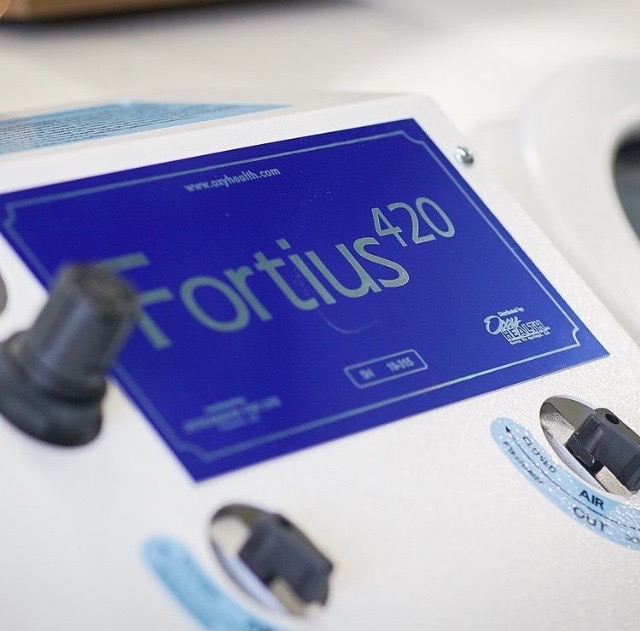
Because if we're serious about becoming a multi-planetary species, we need our explorers in peak condition, not just vaguely-less-decrepit-than-expected condition. Future research will undoubtedly confirm that the true final frontier wasn't just space, but optimizing human physiology with a delightful, bubbly O2 bath. Now, who's got the grant money? I have a proposal for "Hyperbaric Hamster Habitat for a Hostile Heliosphere" that's just chef's kiss